
Waukegan Directory Collections by Year
Waukegan city directories are scattered among three key repositories. The Waukegan Public Library is the practical first stop, but its historical holdings report should be checked against the current catalog. The Waukegan Historical Society has early business, city, and telephone volumes. The Newberry Library in Chicago supplies selected Waukegan and Lake County runs when a local year is absent.
| Collection | Years represented | Where held | Access |
|---|---|---|---|
| City directory holdings report | 1874; 1892-1909 selected; 1913-1957 selected; 1959-current when reported | Waukegan Public Library | Confirm current shelf status |
| City and telephone directories | 1845 business; 1874; 1889-forward with gaps; phone books 1911-1951 selected | Waukegan Historical Society | Research hours or appointment |
| Waukegan and Lake County runs | 1892-1929 selected; 1978-1996 selected | Newberry Library | Finding aid and reading room |
| Early county records | Lake County records from the nineteenth century | Illinois Regional Archives Depository | Contact NIU depository |
Publishers in the holdings report include Polk and Harris. Each firm could organize a volume differently. Treat every range as a shelf lead, not a promise that each year exists or is scanned.
Waukegan Library Directory Research
The Waukegan Public Library genealogy desk connects city directories with census records, maps, photographs, immigration sources, and newspaper files. The Main Library is at 128 N County Street and can be reached at 847-623-2041. Adult Services takes local-history questions at reference@waukeganpl.info or extension 238. The Hinkston Park Branch also provides licensed genealogy databases, though some tools require a library card or an in-library workstation.
The newspaper trail includes Little Fort papers from 1845, Gazette titles from 1850, several daily papers around the turn of the century, the News-Sun, and later Lake County News-Sun coverage. A dated advertisement, death notice, or address item can test a directory entry, but it cannot prove uninterrupted residence.
Open the Waukegan Archive Center before viewing its search screen.
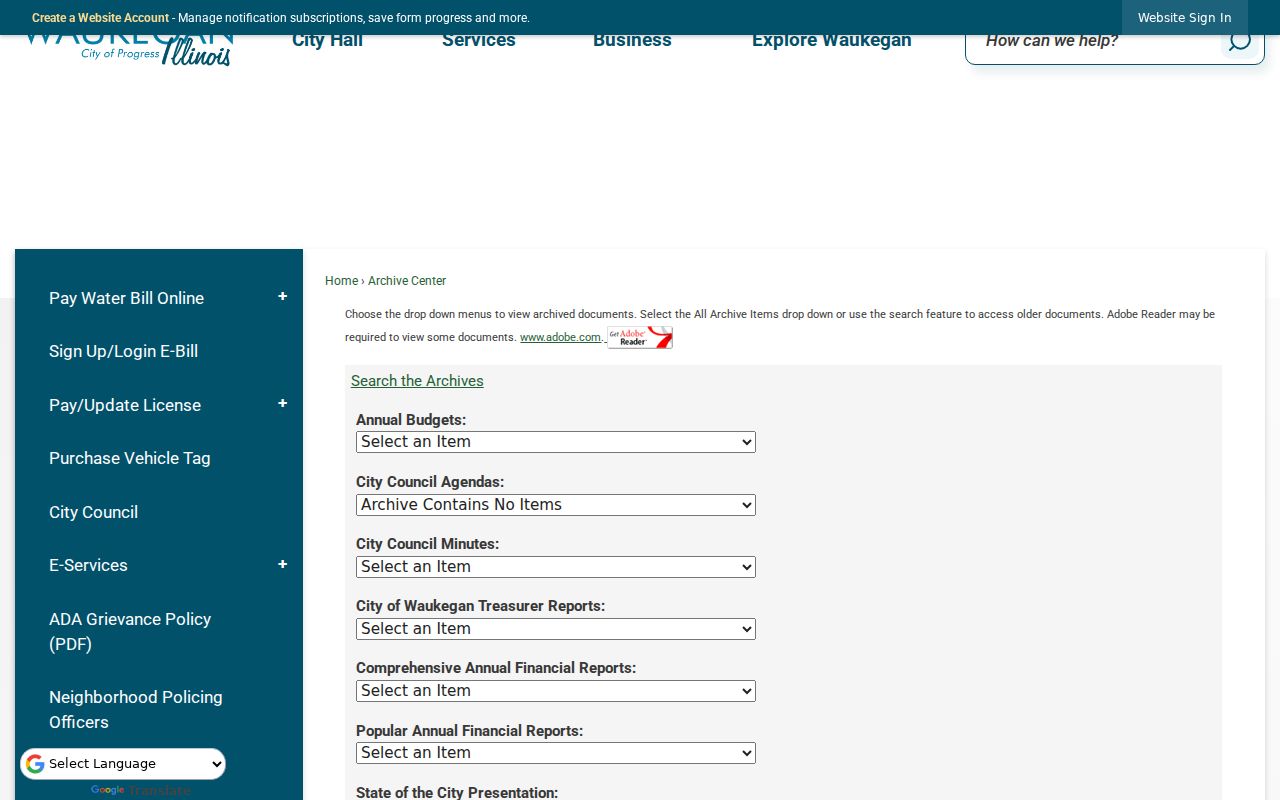
Search by keyword, archive type, time period, and date range. The results are civic records, not a resident roll, so note the person's stated public role.
Reading a Waukegan Directory Entry
A directory line must be read with the key printed in that same volume. No unrestricted Waukegan entry was available during research, so no abbreviation should be assigned to a particular year without checking its key. Common structures may show a surname and initials, a street number, a trade, a telephone, a spouse notation, or a code for residence or boarding.
| Printed name | Copy initials, honorifics, suffixes, and spelling exactly. |
|---|---|
| Address | Keep number, direction, suffix, unit, and home or business context. |
| Role | Record resident, proprietor, boarder, office contact, or telephone subscriber. |
| Citation | Save volume, year, page, section, repository, and call number. |
| Cross-check | Pair the line with a map, newspaper, census, deed, or vital index. |
- Criss-cross directory
- A section arranged by street and house number instead of surname. Confirm its presence volume by volume.
- Householder index
- An address-oriented list of the household name printed by the publisher.
- Abbreviation key
- The volume's guide to short forms. Copy it before interpreting a line.
Search both surname and street sections when both exist. Preserve initials, maiden or married forms, suffixes, and spelling variants. A single matching surname and street is a lead. Two independent, dated sources are stronger.
Waukegan Historical Directory Shelves
The Raymond Research Library at the Waukegan History Museum at Carnegie, 1 North Sheridan Road, lists research hours Wednesday through Friday, 11:00 a.m. to 2:30 p.m. Confirm an appointment before travel. Its collections include city and telephone directories, census material, a People File, early death notices, funeral-home records, yearbooks, historic-home files, maps, scrapbooks, and 7,000 photographs.
The society's old holdings PDF gives an outdated address, while the current page identifies the Carnegie museum. Use current contact guidance. Its request for donated phone books from 1913-1923 and 1957-1967 warns that broad collection ranges contain gaps.
Maps Beside Waukegan City Directories
The society lists atlases dated from 1861 through 1977 and Sanborn fire-insurance material from 1885-1949, with named sheets for 1912, 1917, and 1929. These sources date street layouts and building footprints. They do not identify an owner by themselves. Keep the map year and sheet number beside the city directory citation.
The city map collection adds current street, ward, zoning, and tax-increment district maps. Waukegan spans six townships and nine wards according to the city profile, so a postal label alone does not settle the historical jurisdiction.
Read Waukegan's official history before viewing the city history capture.
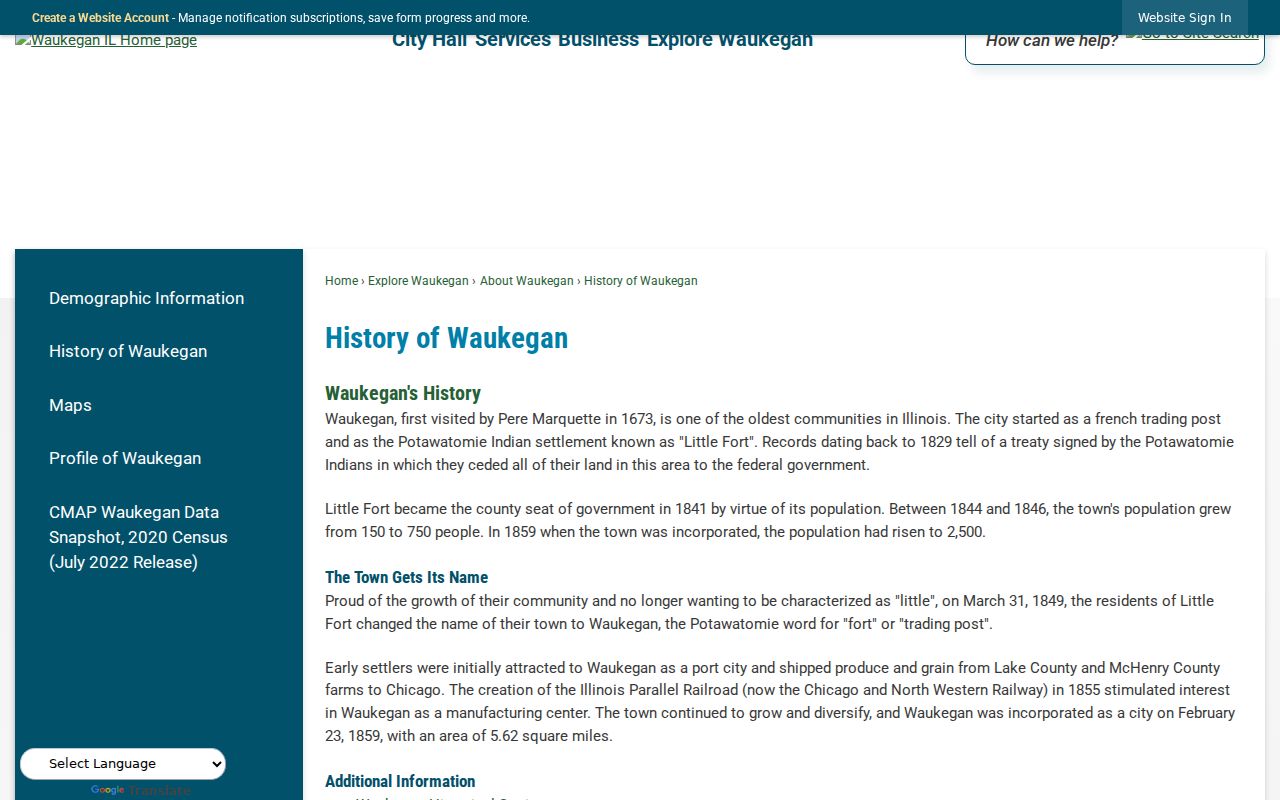
A map is best used to normalize an address. Preserve the printed direction and suffix, check nearby house numbers, and separate Waukegan city from a Waukegan postal label.
Little Fort in Waukegan Searches
Waukegan was called Little Fort until March 31, 1849. Search both names for an early family, business, or street. Preserve the old name in a transcription instead of silently modernizing it. Lake County was established in 1839, and the county seat moved to Little Fort in 1841, so county and municipal sources begin on different timelines.
The courthouse fire of 1875 did not wipe out Lake County's record trail. Official accounts say records were saved in an adjacent brick building. That survival makes IRAD's court, clerk, recorder, naturalization, and tax holdings useful when a Waukegan city directory year is missing.
| 1841 | County seat moved to Little Fort. |
|---|---|
| 1845 | Early library and newspaper clues begin. |
| 1849 | Little Fort became Waukegan. |
| 1875 | Courthouse burned, but county records survived nearby. |
| 1890 | Federal census loss raises the value of local directories. |
This sequence also prevents a false gap. A catalog search under only the modern city name can miss a valid early item.
Waukegan Archive Name Clues
The municipal archive can document a public role tied to a date, such as an official, applicant, business, contractor, board member, or speaker named in a public record. Available sets include council agendas and minutes, budgets, treasurer reports, annual financial reports, and water reports.
Use the advanced Waukegan archive search when a name or institution needs a date range.
A public-record request made through the city can itself become a public record. Keep it narrow and omit personal detail the custodian does not need. When no online result exists, contact the City Clerk, ask the library reference desk, or submit a focused Illinois Freedom of Information Act request for a non-restricted city record.
Waukegan Directory of Civic Memory
Local institutions preserve more than household listings. Waukegan's official pages identify notable residents, past mayors, civic landmarks, and current officials. These are discovery tools. A city list should lead to a dated institutional source, directory page, landmark file, or newspaper citation before a biography is treated as settled.
Check Waukegan's current officials page before viewing the captured roster.
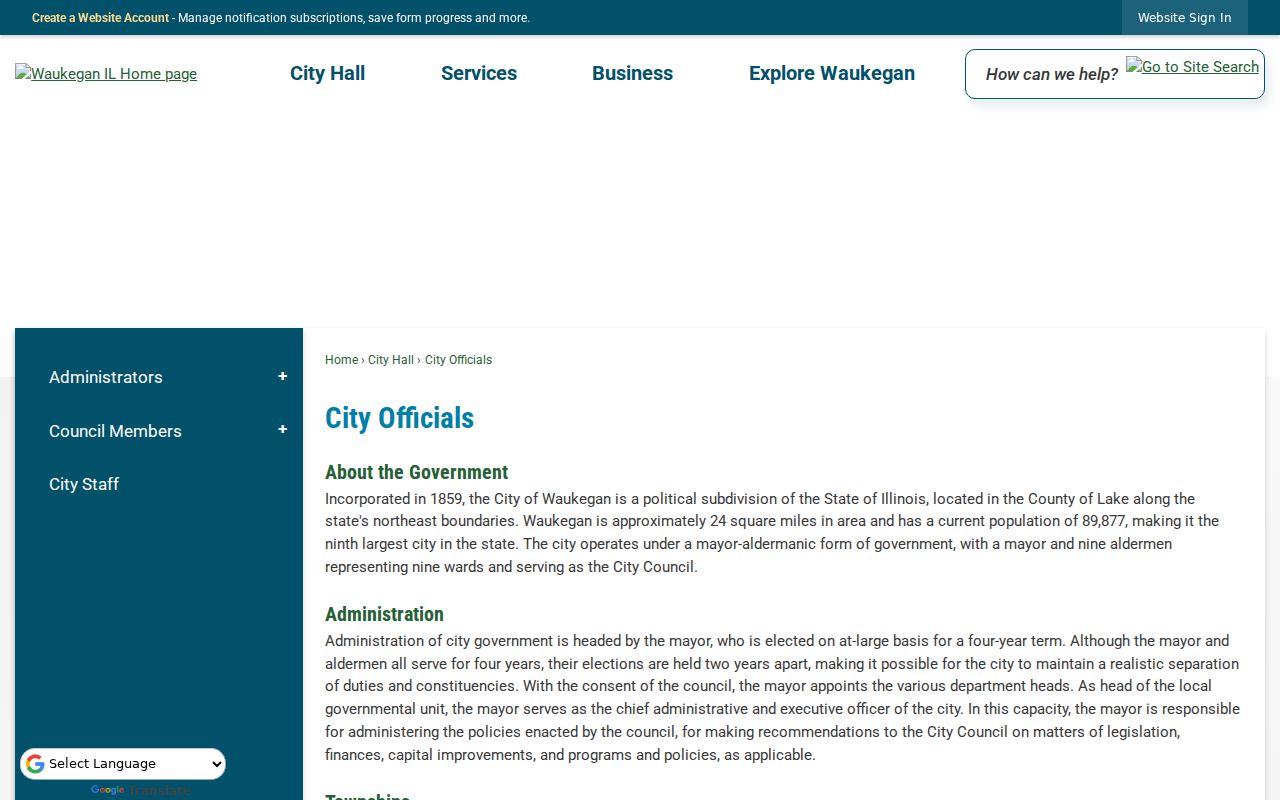
Ray Bradbury's city and library commemorations connect a Waukegan name to public art, an archive, and city history. Jack Benny's landmark record offers another model. Both require dated source citations rather than assumptions based on fame.
Trace Families in Waukegan Directories
A strong family trail follows the same person through dated sources without forcing a match. Start with the exact directory spelling. Check the street section if the volume has one, then compare the nearest released federal census. A later directory may reveal a move, changed name form, or new household role.
- Record the likely entry's year, page, section, address, and abbreviations.
- Search adjacent years, preserving initials, spouse notation, and street format.
- Check a street map or atlas for the address as printed that year.
- Pair the line with the nearest census, newspaper notice, obituary, or People File.
- Use a deed, probate file, or vital index when a legal relationship needs proof.
Disappearance from a Waukegan city directory proves only that the entry is absent. The person may have moved, died, changed names, declined a listing, or been missed. The Waukegan resident lookup can test a modern name without altering the historical citation.
Keep gaps visible. A missing volume or damaged page is a source limit, not evidence that a household moved.