
Waukegan Previous-Resident Sources by Era
No single roll covers every Waukegan address. Modern land records establish a parcel and transfer chain. Earlier deed books, directories, census schedules, maps, and local files extend the trail. Each source answers a different question, so record whether a name is an owner, occupant, document party, relative, or applicant.
| Source | Years it covers | Where held | What it shows |
|---|---|---|---|
| Recorder regular index | 1980-current certified date | Lake County publicsearch and terminals | Parties, documents, PIN, legal description |
| Older recorder indexes | Recording from 1844; pre-1980 books | Online Index Books, Recorder, IRAD | Earlier deeds and plats, often without PIN |
| City directories | 1845 business; 1874; 1889-forward with gaps | WPL, Historical Society, Newberry | Dated occupant, business, phone, or address leads |
| Census and substitutes | Released federal years; local historic series | WPL, Historical Society, FamilySearch | Households and place snapshots |
| Sanborn maps and atlases | Selected 1861-1977; Sanborn 1885-1949 | Historical Society and library | Street and building context, not ownership |
| Building reports | 2001-forward listed archive | Waukegan Building and Code | Dated permit-report clues |
Start in the era closest to the event. Then work outward. A current owner label is not proof of occupancy, and an old directory entry is not proof of title.
Start Waukegan Resident Records with a PIN
Use the Lake County Property Tax Information search with only one path: parcel ID, owner, or address number plus street. The address form allows a direction, suffix, unit, city, township, and ZIP. Capture the current situs address, parcel identification number, municipality, township, legal description, assessment year, and any document clue. Keep the situs, meaning the physical property address, separate from a billing or mailing address.
Next check the Lake County Tax Parcel Viewer. Its inspected parcel layer exposes geometry, a PIN-like name, document number, parcel type, and condominium flag, but not owner or mailing fields. Use the map for parcel shape and related lot context, then return to the assessor and recorder for names.
The clean process is: address → parcel/PIN → legal description → recorded instrument → prior instrument. This guards against matching the wrong Waukegan parcel after a split, merger, or street-number change.
Walk Waukegan Resident Deeds Backward
The Lake County Recording Division portal searches grantor or grantee, document type, document number, PIN, book and page, township, property address, remarks, legal description, and phrases in images. Its normal configuration begins in 1980 and carries a moving certified-through date. Earlier handwritten grantor-grantee books use a separate index route. Public terminals and copy help are available at 18 N County Street, sixth floor, in Waukegan.
- Find the current assessed parcel and copy its exact PIN and legal description.
- Locate the present owner's purchase deed by PIN, address, document number, or party.
- Read the seller, or grantor, then search that party as a grantee in an earlier deed.
- Repeat while confirming lot, block, subdivision, legal description, and recording date.
- At the online cutoff, use Online Index Books, Recorder terminals, historical deed books, or IRAD.
- Grantor and grantee
- The grantor transfers an interest; the grantee receives it in that instrument.
- Chain of title
- The linked sequence of recorded transfers affecting the same land.
- Legal description
- The lot, block, subdivision, or other land description that can survive a changed street number.
- PIN
- The parcel identification number used to connect assessment and mapping records.
PIN search can miss older instruments that lack a PIN. Search by both party and legal description, and preserve trusts, estates, and businesses exactly as named. Recorder staff can help begin a search but do not conduct a title examination or interpret legal effect.
Waukegan Previous-Resident Address Trap
The city's house-history guide gives a concrete renumbering example: 713 N. Genesee became 614 N. Genesee around 1922. That verified case is a warning, not proof that every Waukegan street changed the same way. An address that vanishes from a city directory may simply have a new number.
Bridge a suspected change with adjacent house numbers, lot and block, legal description, plat, atlas, Sanborn sheet, and dated city map. Keep an old and new address as separate events in the worksheet. Do not replace the historic form in a citation.
Little Fort adds a second search quirk. Waukegan used that name until March 31, 1849. Early catalogs and notices may use either place name, while later deeds can retain old legal language.
Waukegan Library Finds Past Residents
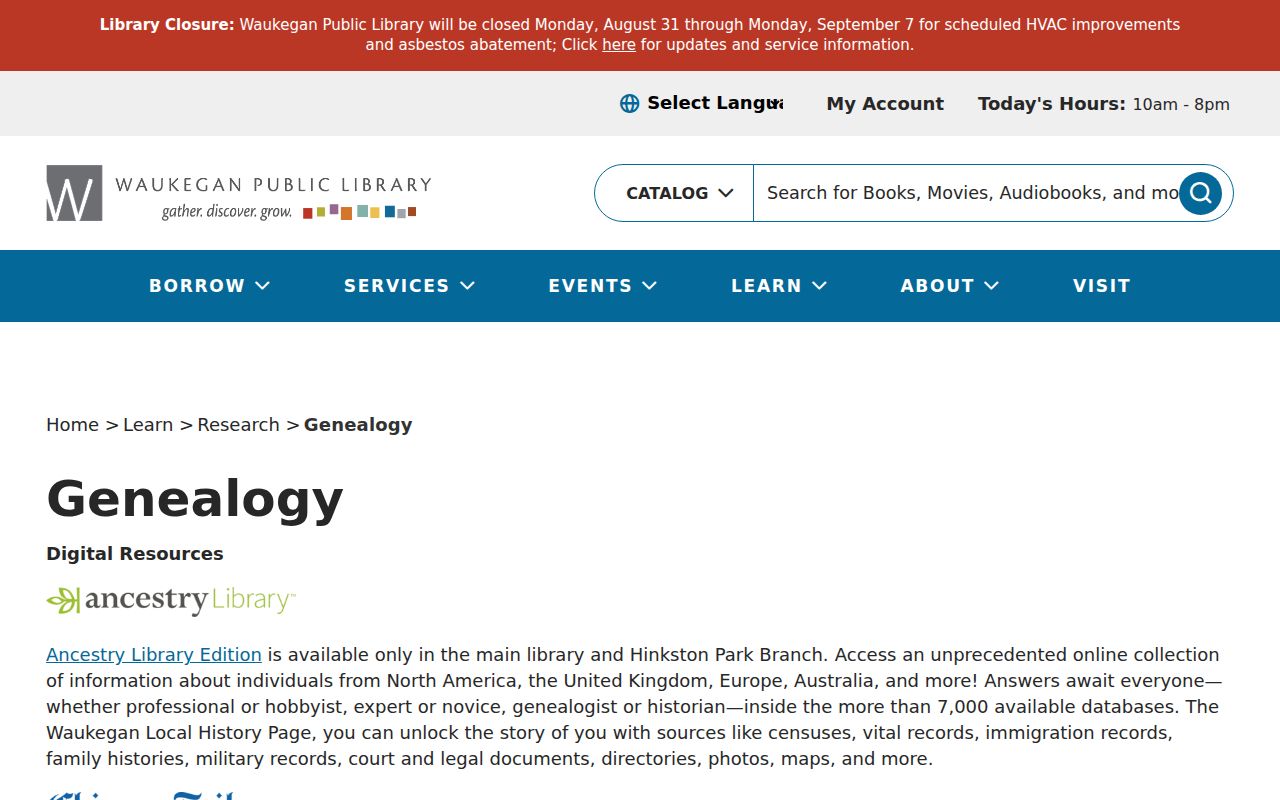
The Waukegan Public Library genealogy service links directories with newspaper microfilm, obituary help, maps, census sources, and licensed databases. Adult Services at the Main Library, 128 N County Street, accepts local-history inquiries by phone or email. Its newspaper runs stretch from Little Fort titles in the 1840s through modern Lake County News-Sun access, though many runs contain gaps.
Review the library genealogy and obituary resources before using the captured page.
An obituary or death notice can close the trail for previous residents, add relatives, and explain why a household disappears. Cite the publication, date, and page. A name in a newspaper still needs an address or another discriminator before it joins the property chain.
Waukegan Past-Resident House Files
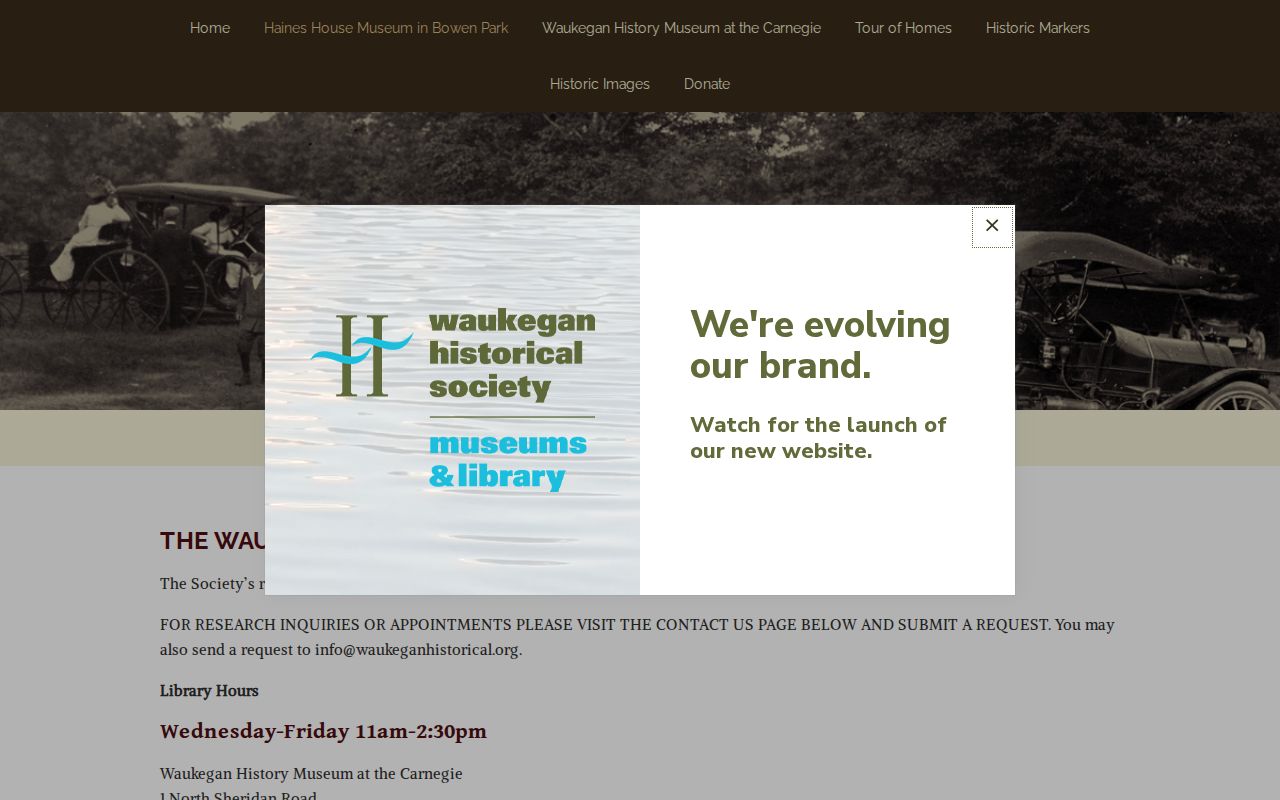
The Waukegan Historical Society research library holds a rich house-history layer: historic district home files, city and telephone directories, atlases, Sanborn maps, the People File, obituaries, early death notices, funeral-home records, yearbooks, photographs, and scrapbooks. The current research site is the Waukegan History Museum at Carnegie, 1 North Sheridan Road. Confirm hours or an appointment.
Check the Raymond Research Library holdings before viewing the captured collection page.
Named Sanborn sheets exist for 1912, 1917, and 1929, with broader microfilm coverage from 1885-1949. They show a dated building footprint and use, not ownership. Atlases add selected views from 1861 to 1977. Record the sheet, edition, date, and repository.
Pair Waukegan Resident Directories and Census
Owners are only half of a previous-resident search. City directories and released census schedules can identify renters, relatives, boarders, or other occupants. The full shelf coverage and publishers are explained in the Waukegan city directory collection. For this address trail, use each book only as a dated step.
- Choose a directory year and copy the household name, exact address, page, section, and abbreviation key.
- Open the nearest released federal census and compare spelling, household members, and place.
- Check the next available directory to see whether the address or name changed.
- Use a newspaper, obituary, funeral file, yearbook, or probate lead to explain the change.
- Label unresolved gaps rather than assuming a move or death.
The federal 1890 census loss makes local substitutes especially valuable. The Historical Society lists older census and local-history materials, but any item described as an 1890 substitute must be labeled by its actual source type. A gap between directory years also proves nothing by itself.
Confirm Waukegan Past-Resident Endpoints
Vital, probate, court, and cemetery sources can close an address trail. The Waukegan City Clerk is a short-term local registrar for specified Waukegan births and deaths. The Lake County Clerk issues county certified copies, while the Illinois Department of Public Health handles state routes and genealogy copies under eligibility rules. A certified marriage copy comes from the county where it occurred, and a certified divorce copy comes from the circuit clerk where granted.
For old county matters, IRAD's Lake County holdings provide clerk, court, recorder, naturalization, and tax leads. The courthouse fire in 1875 did not erase the county trail because records were saved in an adjacent building. Historical court indexes and surviving volumes may therefore explain an estate transfer seen in the deed chain.
When an ordinary portal fails, contact the library, society, Recorder, City Clerk, or relevant county desk. A focused records request can seek a non-restricted city or county record, but it cannot bypass vital-record eligibility or replace a certified copy.
Limits on Waukegan Previous Residents
A deed party may never have occupied the house. A directory publisher may omit a household. A tax bill may go to a mailing address elsewhere. A permit identifies an applicant or project, not everyone who lived there. Keep each role distinct and require at least two dated points before joining a common name to one Waukegan address.
The Illinois Address Confidentiality Program protects qualifying survivors through a substitute address. Restricted vital records, sealed cases, and protected addresses stay outside a house-history search. Do not publish a sensitive location or use historical findings to track or harass a living person.
Lawful use. Research Waukegan previous residents for genealogy, house history, estate work, or personal curiosity, never to expose or harm someone.
A careful final worksheet has one row per source: name, address as printed, role, date, record number or page, repository, matching parcel or legal description, and uncertainty. That audit trail is more useful than a smooth story built on guesses.